Somnera
CBT-I science

What is CBT-I? The insomnia treatment guidelines recommend first

Cognitive behavioral therapy for insomnia, in plain terms: what it is made of, how strongly it is recommended, and what it actually changes.

5 min read

Last reviewed October 7, 2026

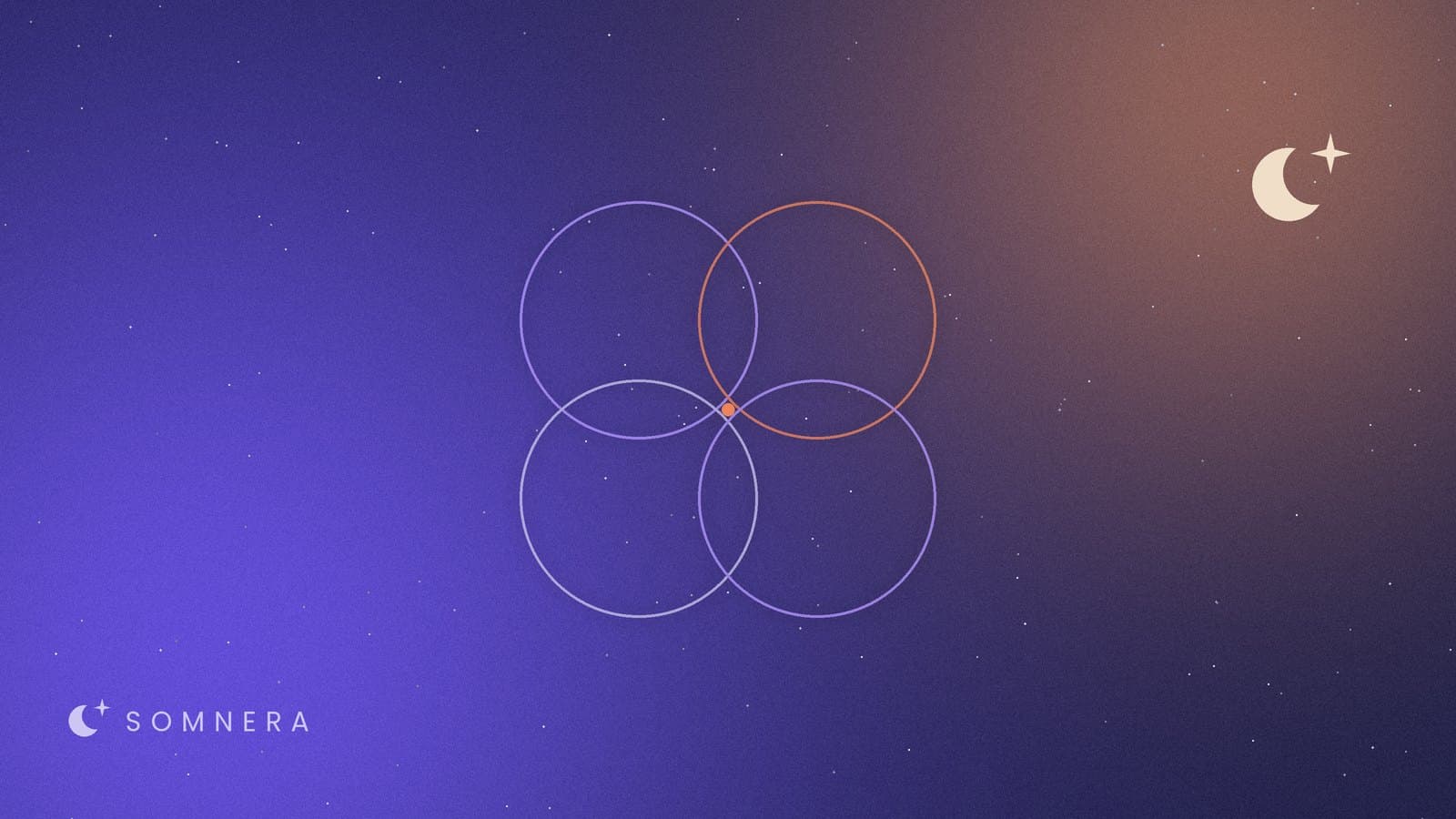
Four overlapping circles on a night-sky background, one for each part of CBT-I

Share

CBT-I - cognitive behavioral therapy for insomnia - is a structured, several-week program that treats insomnia by changing the habits and thinking that keep it going. It is the treatment the major guidelines recommend before sleeping pills, and it is the only one in the American Academy of Sleep Medicine's behavioral guideline to get a strong recommendation.

That is the short version. Here is what is actually inside it.

CBT-I at a glance

CBT-I
What it isA structured, multi-week treatment for chronic insomnia
Core componentsSleep restriction, stimulus control, cognitive work, relaxation, sleep education
Typical lengthFour to eight weeks in the trials
How it is deliveredOne-to-one, in groups, or as a self-guided or digital program
Guideline positionThe only strong recommendation in the AASM behavioral guideline; first-line per ACP and the European guideline
What it changesHow quickly you fall asleep, how long you lie awake, how consolidated the night is
What it does not reliably changeTotal hours of sleep

What it is made of

CBT-I is not one technique. It is a bundle, and the bundle matters - the guidelines recommend the combination far more strongly than any single piece of it.

Sleep restriction

Temporarily limiting time in bed to roughly the time you are actually asleep, so that sleep becomes more concentrated, then widening that window as it consolidates. It sounds backwards and it is the most powerful part. The full explanation is here.

Stimulus control

A short set of rules that rebuild the link between bed and sleep: go to bed only when sleepy, get up if you cannot sleep, use the bed for sleep, keep the same rising time every day. How that works in practice.

Cognitive work

Identifying and testing the beliefs that drive worry about sleep - that a bad night will ruin tomorrow, that you need eight hours to function, that you have lost the ability to sleep.

Relaxation

Techniques for lowering the physical arousal that makes falling asleep hard.

Sleep education

How sleep is regulated and why the program asks for what it asks. On its own this is not treatment; inside the program it is what makes the rest make sense.

Underneath all of it is the sleep diary. Every decision in CBT-I is made from your own recorded nights, not from a general rule or a feeling.
Take the free assessment to see:

  • ✓Your Insomnia Severity Index (ISI) score
  • ✓A personalized 6-week CBT-I plan, built by a sleep physician
  • ✓How your sleep improves, night by night
Start free assessment

How strongly it is recommended

Three major guideline bodies have looked at the same evidence and landed in the same place.

The American Academy of Sleep Medicine's behavioral guideline gives exactly one strong recommendation for chronic insomnia in adults: multicomponent CBT-I. Single components - stimulus control alone, sleep restriction alone, relaxation alone - are recommended conditionally. Sleep hygiene on its own gets a recommendation against its use as a standalone treatment.

The American College of Physicians recommends that all adults with chronic insomnia receive CBT-I as the initial treatment. Strong recommendation, moderate-quality evidence.

The European guideline, updated in 2023, recommends it as first-line treatment, delivered in person or digitally.

For comparison, every one of the fourteen medication recommendations in the AASM's separate drug guideline is weak, on low or very low quality evidence.

What it actually changes

The most-cited pooled analysis of the trials found that, immediately after treatment, people fell asleep about 19 minutes faster (95% CI 14.1 to 23.9), spent about 26 minutes less awake during the night (95% CI 15.5 to 36.5), and gained about 10 percentage points of sleep efficiency (95% CI 8.1 to 11.7).

Total sleep time did not change significantly. That is worth knowing up front, because it is the opposite of what most people expect. What CBT-I reliably changes is how consolidated sleep is - fewer long wakings, less time lying there - not how many hours you get. The full evidence, including who it does not work for.

What it is not

It is not sleep hygiene. A cool room and no screens is advice most people with chronic insomnia have already followed, and it is not what fixes the problem. Why that is.

It is not quick. The trials generally run four to eight weeks, and the early weeks often feel worse before they feel better, because sleep restriction builds sleep pressure deliberately.

And it is not right for everyone. Untreated sleep apnea, an untreated circadian rhythm problem, severe active depression, or a job where daytime sleepiness is dangerous all change the picture, and are worth raising with a clinician before starting.

Who it is for

Adults whose insomnia has become a pattern - difficulty falling asleep, staying asleep, or waking too early, on three or more nights a week for three months or more, with daytime consequences. That is the definition of chronic insomnia, and it is the population the guidelines and trials are built on. What counts as insomnia, and when it becomes chronic.

If you want to see what a program looks like week by week, the whole structure is here, and the rest of this section covers the evidence in more depth.

Somnera is a self-guided education program built on CBT-I, founded and written by Dr. Camilo Ruiz, DO, FACOI, FAASM. It is not a diagnosis and does not replace care from your own clinician. The assessment is free and takes about two minutes.

Citations

  • Edinger JD, et al. Behavioral and psychological treatments for chronic insomnia disorder in adults: an American Academy of Sleep Medicine clinical practice guideline. J Clin Sleep Med. 2021;17(2):255–262. doi:10.5664/jcsm.8986
  • Qaseem A, et al. Management of chronic insomnia disorder in adults: a clinical practice guideline from the American College of Physicians. Ann Intern Med. 2016;165(2):125–133. doi:10.7326/M15-2175
  • Riemann D, et al. The European Insomnia Guideline: an update on the diagnosis and treatment of insomnia 2023. J Sleep Res. 2023;32(6):e14035. doi:10.1111/jsr.14035
  • Trauer JM, et al. Cognitive behavioral therapy for chronic insomnia: a systematic review and meta-analysis. Ann Intern Med. 2015;163(3):191–204. doi:10.7326/M14-2841
  • Sateia MJ, et al. Clinical practice guideline for the pharmacologic treatment of chronic insomnia in adults: an American Academy of Sleep Medicine clinical practice guideline. J Clin Sleep Med. 2017;13(2):307–349. doi:10.5664/jcsm.6470

Frequently asked questions

Cognitive behavioral therapy for insomnia. It is a structured program, usually run over several weeks, that targets the behaviors and thought patterns that keep insomnia going rather than sedating you into sleep.

No. It borrows the name but it is a specific, protocol-driven treatment for sleep. Most of the work is behavioral - when you go to bed, when you get up, what you do when you cannot sleep - and it is measured with a sleep diary rather than talked through.

Multicomponent CBT-I is the only treatment given a strong recommendation in the American Academy of Sleep Medicine's behavioral guideline for chronic insomnia. The American College of Physicians recommends it as the initial treatment for all adults with chronic insomnia.

The European guideline recommends it as first-line treatment whether it is delivered in person or digitally. Therapist-led and self-guided formats both have trial evidence behind them.