Somnera
CBT-I science

Are sleep trackers accurate? What your sleep score can and can't tell you

Wearables and phone apps guess at your sleep from movement and heartbeat, not brain waves. What they get roughly right, what they miss, and why CBT-I runs on a diary instead.

8 min read

Last reviewed October 18, 2026

Four app tiles, with only one showing a structured daily program

Share

It is 6:04am. You have not opened your eyes properly yet, but you have opened the app. The verdict is in: a sleep score in the low sixties, a sad little bar labelled "deep sleep" that looks like it lost a fight, and a gentle suggestion that you "take it easy today." You felt fine about thirty seconds ago. You do not feel fine now.

So, are sleep trackers accurate? The honest answer is: somewhat, for some things, if you look at them the right way. They are clever estimators, not measuring tapes. Knowing what they can and cannot see makes the morning number a lot less dramatic, and for people with insomnia, that matters more than it sounds.

How sleep trackers actually guess at your sleep

Sleep is something your brain does. The gold-standard way to measure it is to record the brain directly, which is what a lab sleep study does.

A wrist or ring tracker cannot do that. It has no view of your brain at all. Instead it watches things that tend to change when you fall asleep:

  • Movement, via a tiny accelerometer. Still for a while? Probably asleep. Tossing around? Probably awake.
  • Heart signals, via a light sensor on the skin: heart rate and how much it varies from beat to beat, which shift as you move through the night.
  • Sometimes breathing rate, skin temperature or blood oxygen, depending on the device.

Phone apps that sit on the mattress or listen from the nightstand use sound and motion instead. Either way, a piece of software takes those signals and makes its best guess: asleep or awake, and which stage. That guess is then rolled into a single, very confident-looking score.

A sleep study, or polysomnography, is a different animal. It records brain waves, eye movements, muscle tone, breathing, oxygen and heart rhythm all at once, and a trained technologist scores the night. Sleep stages are defined by those brain signals. Everything else is inference.

Sleep tracker Movement Heart rate and rhythm Software estimates sleep Lab sleep study Brain waves, eyes, muscle Breathing, oxygen, heart Technologist scores sleep
A tracker infers sleep from what your body does while asleep. A sleep study records the brain activity that defines sleep in the first place.

What sleep trackers get roughly right

Credit where it is due. For a lot of people, a tracker is a decent rough guide to a few things:

  • Total sleep time, as a ballpark. Asleep versus not-asleep is the easiest call, and trackers tend to do best here.
  • Your schedule. When you went to bed, when you got up, and how much that drifts between weeknights and weekends. Trackers are honest witnesses to the Saturday lie-in.
  • Patterns over many nights. A run of short nights during a stressful month, or longer nights on vacation, will usually show up. One night is noise; a few weeks starts to look like a trend.

That is genuinely useful. If you want a general picture of your habits, a tracker will show it to you, as our comparison of sleep apps puts it.

What sleep trackers get wrong

Here is where the confident little graphs start overselling themselves.

Sleep stages

Deep sleep, light sleep and REM are defined by brain activity. A device that cannot see the brain is estimating stages from heart and movement patterns that only loosely line up with them. The stage breakdown is the least reliable thing on the screen, which is awkward, because it is also the part people worry about most. A "bad deep sleep night" may simply be a night the algorithm guessed differently.

Short wakings

Brief awakenings in the night are normal, and many are too short to remember. Trackers can miss some of them, or blur several into one, or invent a waking when you rolled over. The tidy hypnogram in the app is a smoothed sketch, not a transcript.

People who lie still while awake

This is the big one for insomnia. If you lie motionless in the dark at 3am, trying very hard to be asleep, a movement-based device may well decide you are asleep. You know you spent an hour staring at the ceiling, planning a eulogy for your productivity. Your wrist thinks you were having a lovely time.

That mismatch cuts both ways. People with insomnia also tend to recall more time awake than a recording shows, because lying awake is vivid and sleeping is not. Neither the tracker nor your memory is a perfect witness. That is precisely why the question CBT-I asks is not "what exactly happened?" but "what is the pattern, and how do you feel?"

Orthosomnia: when the score becomes the problem

Sleep researchers coined a term for a pattern they started seeing in clinic: orthosomnia, a preoccupation with achieving perfect sleep data. People arrived convinced their sleep was broken because of what an app said, sometimes despite feeling reasonably well.
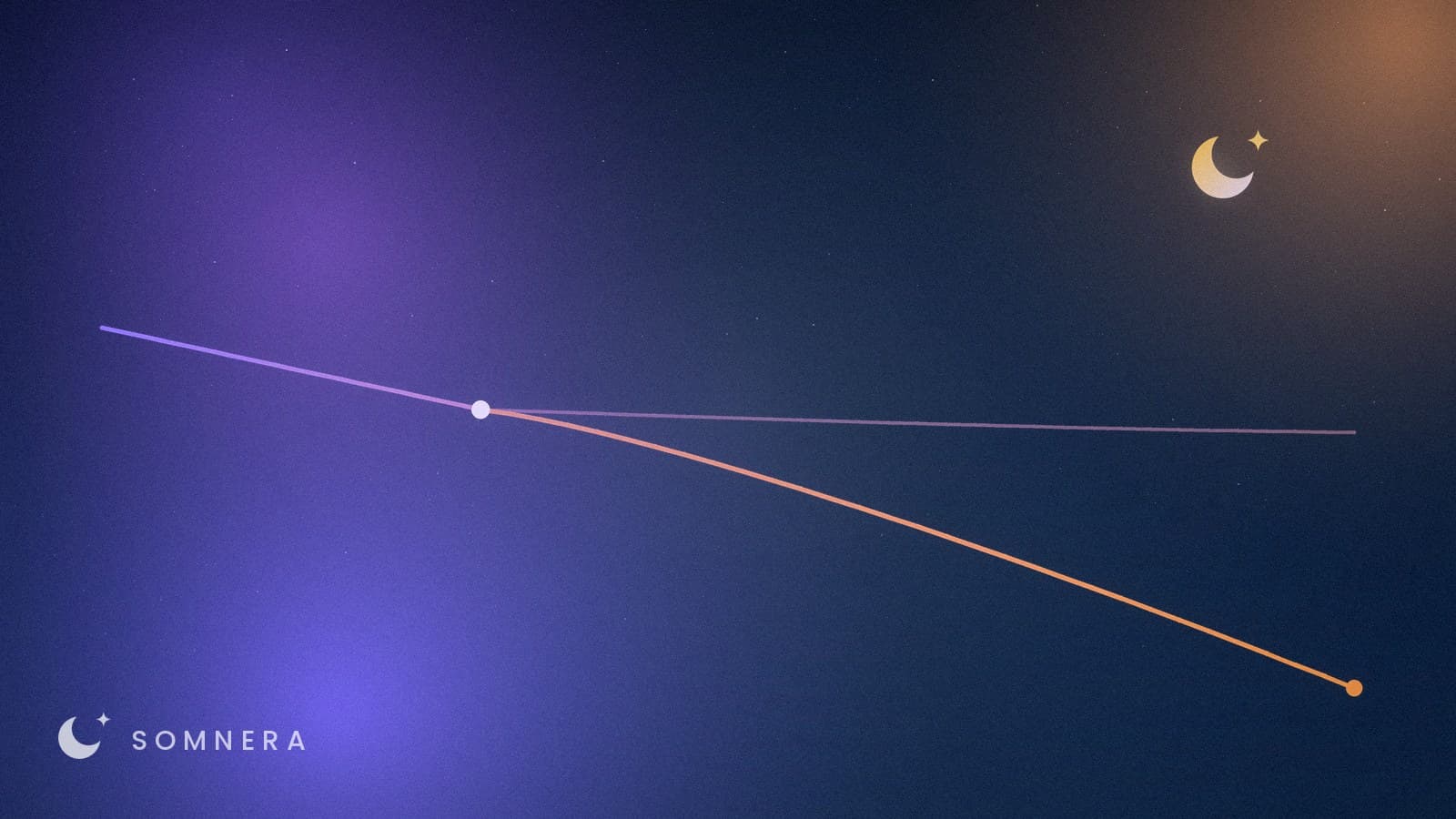
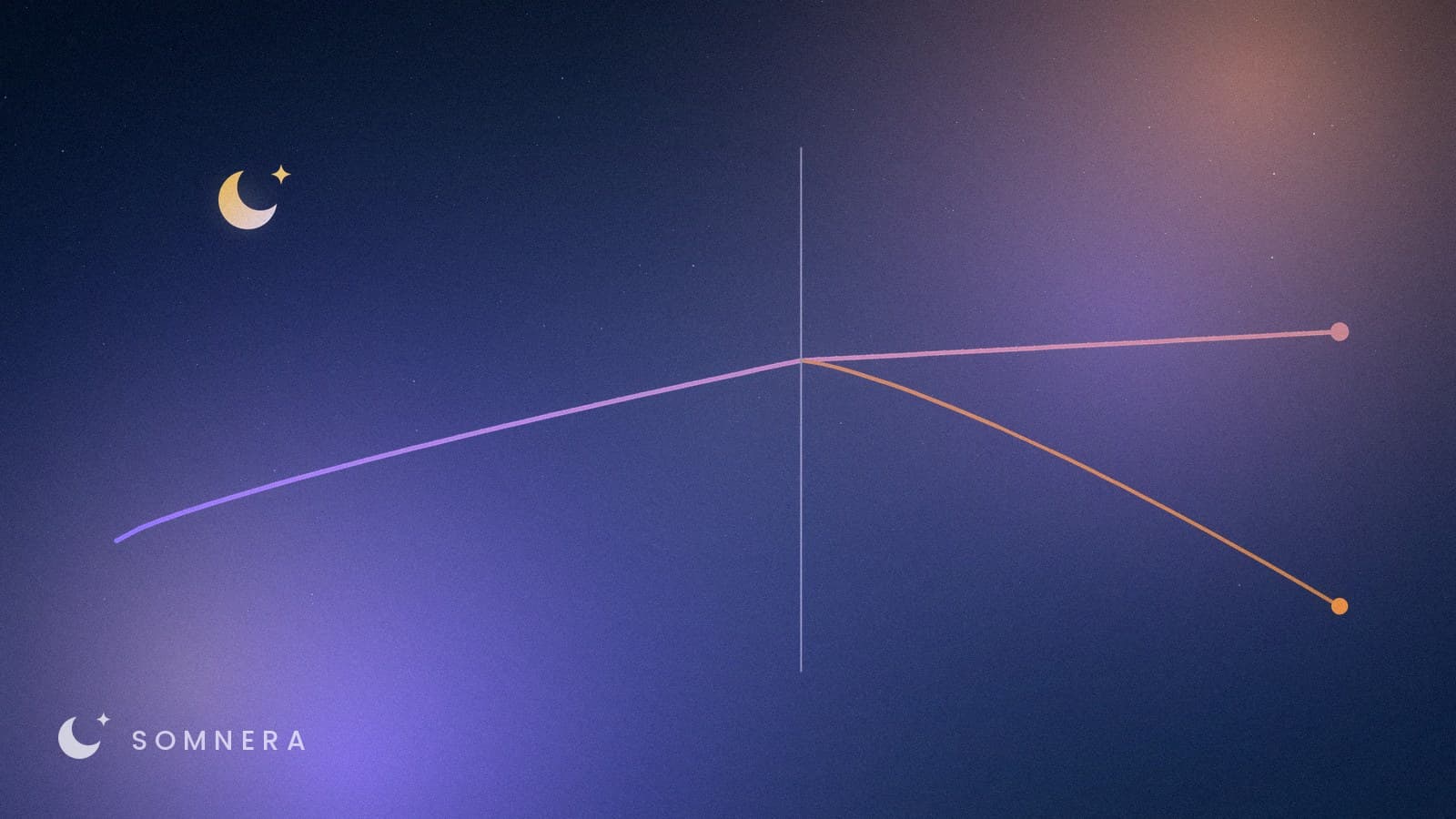
The trouble is that sleep is one of the few things that gets worse the harder you try. Effort, monitoring and worry are the opposite of what sleep needs. One of the established models of insomnia describes exactly that loop: worry about sleep, scanning for signs of trouble, and misjudging how much you slept, each feeding the next. A nightly score slots straight into it.

It tends to look like this:

  • Checking the score before you have checked how you feel.
  • Going to bed earlier to "bank" deep sleep, then lying awake longer.
  • Canceling plans, or skipping exercise, because the app said recovery was low.
  • Feeling fine at breakfast, then tired once you have seen the number.

That last one is worth sitting with. If a number can talk you into feeling worse, the number is doing more harm than the night was. Worry about sleep is a real driver of insomnia, and sleep anxiety has its own page for good reason.

How to use a sleep tracker sensibly

You do not have to throw it in a lake. A few ground rules keep it in its place:

  • Trends, not nights. Look weekly, if at all. A single night's score is weather; you want climate.
  • Ignore the stage breakdown. It is the least accurate part and the most likely to cause worry.
  • Ask your day first. How is your energy, mood and concentration? That is the outcome that matters, and no device measures it.
  • Do not check it at night. Looking at any screen at 3am to see how badly you are sleeping is a reliable way to sleep worse.
  • Try a break. If the morning number reliably sets your mood, put the tracker in a drawer for a few weeks and see how you feel. Many people are surprised.

And if a score is the only reason you think something is wrong, it is not a reason for a sleep study on its own. Symptoms are the reason to ask: loud snoring, gasping awake, real daytime sleepiness.

Tracker vs sleep study vs sleep diary

Sleep tracker
Measures: movement and heart signals, every night, at home.
Good for: rough total sleep and your schedule over weeks.
Weak on: sleep stages, short wakings, lying still while awake.
Role in insomnia care: not a treatment, and not diagnostic.
Lab sleep study (polysomnography)
Measures: brain waves, breathing, oxygen, heart and muscles, usually for one night.
Good for: finding disorders that happen during sleep, such as sleep apnea.
Weak on: showing your usual pattern; one night in a strange room is not a typical week.
Role in insomnia care: not routinely needed for insomnia alone.
Sleep diary
Measures: your bedtime, time to fall asleep, time awake, rise time and how the night felt, every morning.
Good for: the pattern across weeks, and the numbers CBT-I decisions are made from.
Weak on: exact minutes, which it does not need.
Role in insomnia care: the core measuring tool in CBT-I.
Three ways to look at sleep, built for three different jobs.

Why CBT-I relies on a sleep diary, not a tracker

Cognitive behavioral therapy for insomnia, or CBT-I, is the treatment clinical guidelines recommend first for chronic insomnia, and the American Academy of Sleep Medicine describes it as a leading approach. It is built on a diary, not a device, and that is a deliberate choice rather than a technology gap.

Three reasons:

Insomnia is about experience, not only minutes. It is defined by difficulty falling or staying asleep with daytime consequences, plus distress about it. Your sense of the night is part of the condition, so it belongs in the record.

The diary feeds a decision. From a week of entries come total sleep time and sleep efficiency, time asleep divided by time in bed. Consolidated sleep usually sits above 85%. That number sets the sleep window and tells you when to widen it. A tracker hands you a score; a diary hands you a next step.

It is calm by design. You fill it in once, in the morning, rounding to the nearest fifteen or thirty minutes. No checking in the night, no stage graphs, no verdict. How to keep one takes a few minutes to learn.

Some people use both: a diary for the program and a tracker in a drawer, or glanced at weekly. If the two disagree, go with the diary and how your days feel. The diary is the one the plan is built around, and CBT-I is the part with the evidence behind it.

The short answer

Are sleep trackers accurate? Accurate enough to show you roughly how long you sleep and when, across weeks. Not accurate enough to grade your deep sleep, catch every waking, or tell whether you were lying awake perfectly still. And not built to treat anything. If you have had trouble sleeping three or more nights a week for months, the useful question is not what your score was, but whether a structured program like CBT-I fits you. The NHLBI's overview of insomnia is a good plain-language starting point.

Somnera is a self-guided education program built on CBT-I, founded and written by Dr. Camilo Ruiz, DO, FACOI, FAASM. It is not a diagnosis and does not replace care from your own clinician. The assessment is free and takes about two minutes.

A tracker measures; a CBT-I app works on the habits behind insomnia.

Sources and further reading

Frequently asked questions

Partly. Wearables and phone apps estimate sleep from movement and heart signals rather than measuring brain activity. They tend to be reasonable for total sleep time and your general pattern over many nights, and much less reliable for sleep stages, brief wakings, and people who lie still while awake.

This is where they are weakest. Sleep stages are defined by brain activity, which only a lab sleep study (polysomnography) records. A tracker's stage breakdown is an educated guess from indirect signals, so it is best not read night by night.

A tracker measures sleep; it does not change it. Tracking is not a recommended treatment for chronic insomnia. The guideline-recommended treatment is CBT-I, which uses a sleep diary to set and adjust a sleep schedule.

Orthosomnia is a term sleep clinicians use for a preoccupation with getting perfect sleep data. Trying hard to improve a score can raise worry and effort around sleep, which tends to make sleep worse, not better.

No. Consumer trackers are not diagnostic. Insomnia is diagnosed from your history and pattern over months. Symptoms like loud snoring, gasping awake or real daytime sleepiness are the reason to ask a clinician about a sleep study, not a low score.

Not necessarily. If you can glance at weekly trends and move on, it may be harmless. If you check it first thing, feel anxious about the number, or change your plans around it, putting it in a drawer for a few weeks is a reasonable experiment.