Because tired and sleepy are not the same thing. They feel like they should be. You have been running on five hours for a fortnight, you could weep from fatigue by four in the afternoon, and then your head hits the pillow and something switches on.
That gap between exhausted and sleepy is most of what insomnia is.
Two different systems
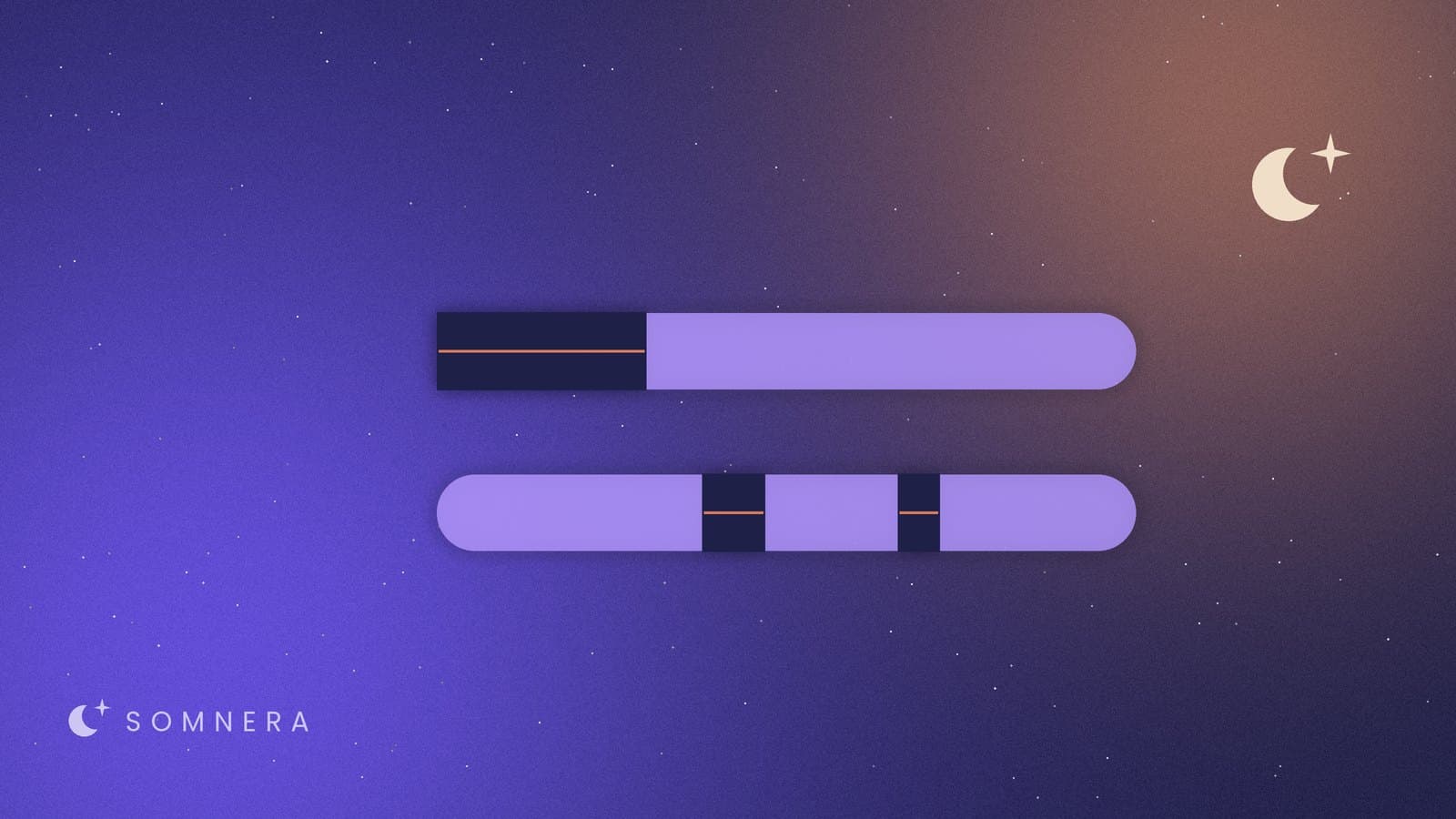
Sleep is broadly governed by two processes running at once. The first is sleep pressure: a drive that builds steadily the longer you are awake and is discharged when you sleep. Sixteen hours awake produces a lot of it. A nap spends some of it.
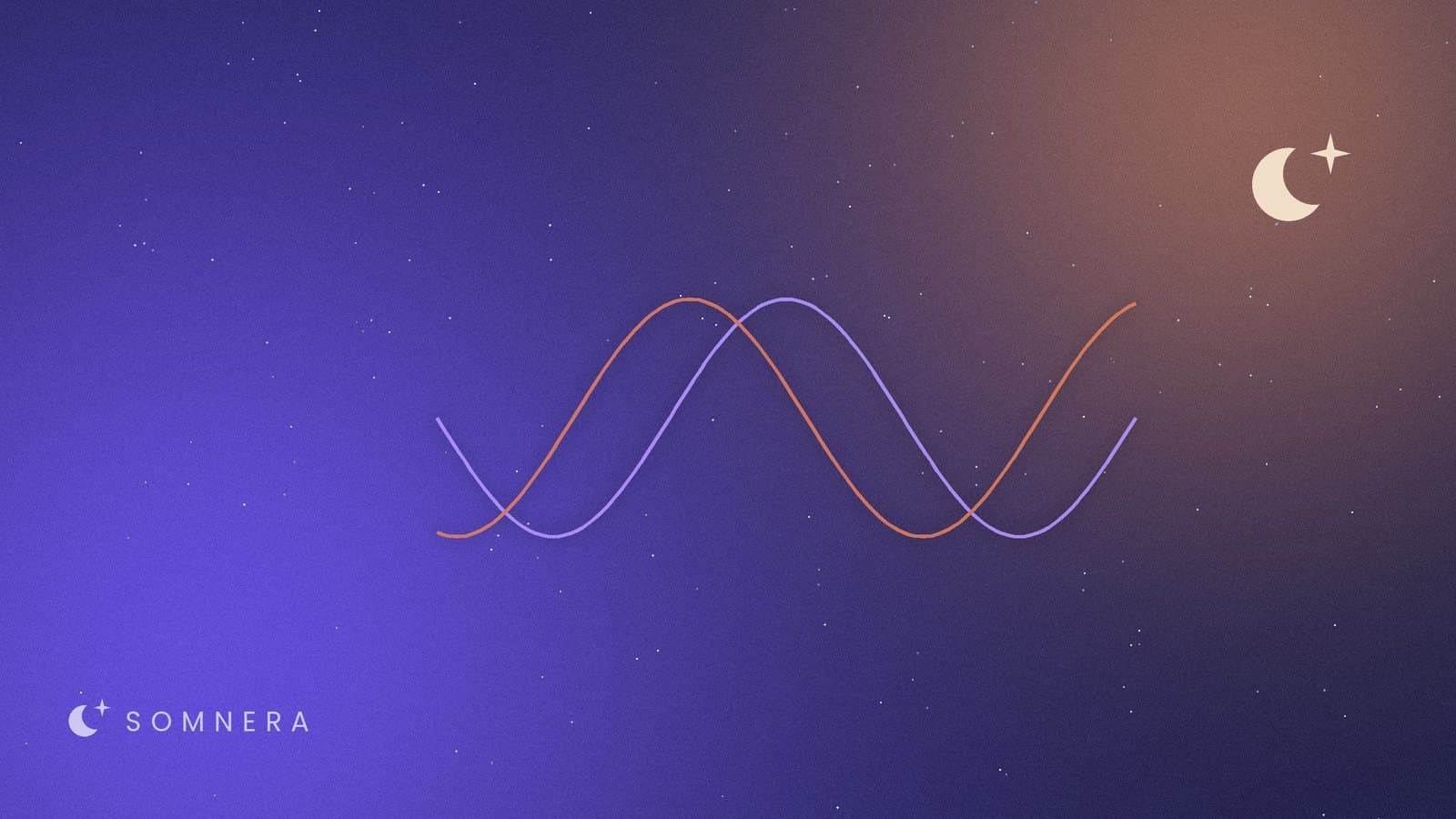
The second is your circadian rhythm, the roughly 24-hour timing signal that decides when your body expects to be asleep and when it expects to be up. The model has been the standard framework in sleep research since Borbély described it in 1982.
Neither of those is fatigue. Fatigue is depletion — the sense of having nothing left, which comes from being under-slept, from stress, from illness, from doing too much. You can be profoundly fatigued and have very little sleep pressure, particularly if you dozed on the sofa at nine, or if you have been spending nine hours in bed to catch five hours of sleep.
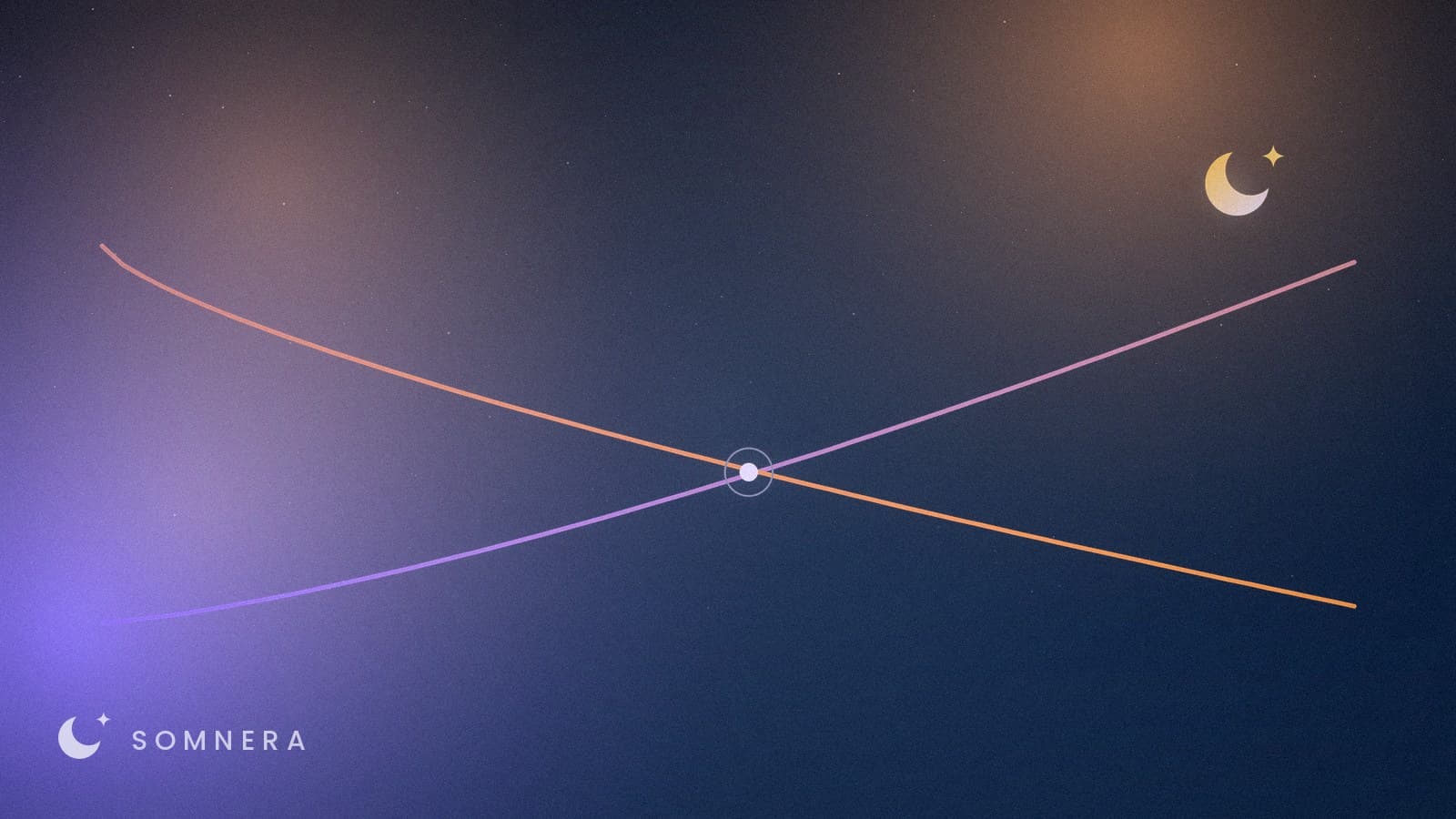
So the honest translation of "I'm exhausted but I can't sleep" is usually: I am depleted, and I do not currently have enough sleep pressure to overcome how activated I am.
The part that switches on at bedtime
The other half is arousal, and it is the better documented half. The hyperarousal model of insomnia describes people with chronic insomnia as being in a state of heightened activation across the whole 24 hours — not only at night, and not only psychologically. It shows up in heart rate, in body temperature, in stress hormone patterns.
Which explains something that otherwise makes no sense: you are more awake in bed than you were on the sofa. Nothing about your tiredness changed in the walk upstairs. What changed is the context.
If you have spent months lying awake in that bed, the bed itself has become a cue. Not metaphorically — it is straightforward associative learning. The room, the sheets, the act of turning off the light have been paired with frustrated wakefulness enough times that they now produce alertness. This is also why the cool room and the blackout curtains did not fix it. The environment was never the problem.
Why trying harder makes it worse
There is a specific trap here worth naming, because almost everyone falls into it.
Sleep is not a task you can complete through effort. It arrives when conditions permit. Effort is a condition that does not permit — deliberately trying to fall asleep raises arousal, which is the exact thing standing between you and sleep.
So the harder the night matters, the worse it goes. The night before a presentation. The night before a flight. And, cruelly, the night after a run of bad ones, when you are most desperate for it to work.
You cannot decide to sleep. You can only stop preventing it, and then wait.
What actually changes it
Two levers, and they work in opposite directions on the same problem.
Raise sleep pressure
Time awake is what builds it, so the intervention is counterintuitive: spend less time in bed, not more. Compressing time in bed to roughly match the sleep you are actually getting concentrates the pressure until it is strong enough to overcome the arousal.