Somnera
The middle of the night

How to fall asleep fast: what genuinely helps, and what backfires

The quick techniques that help on a given night, why trying harder makes insomnia worse, and when it stops being a tips problem.

10 min read

Last reviewed October 16, 2026

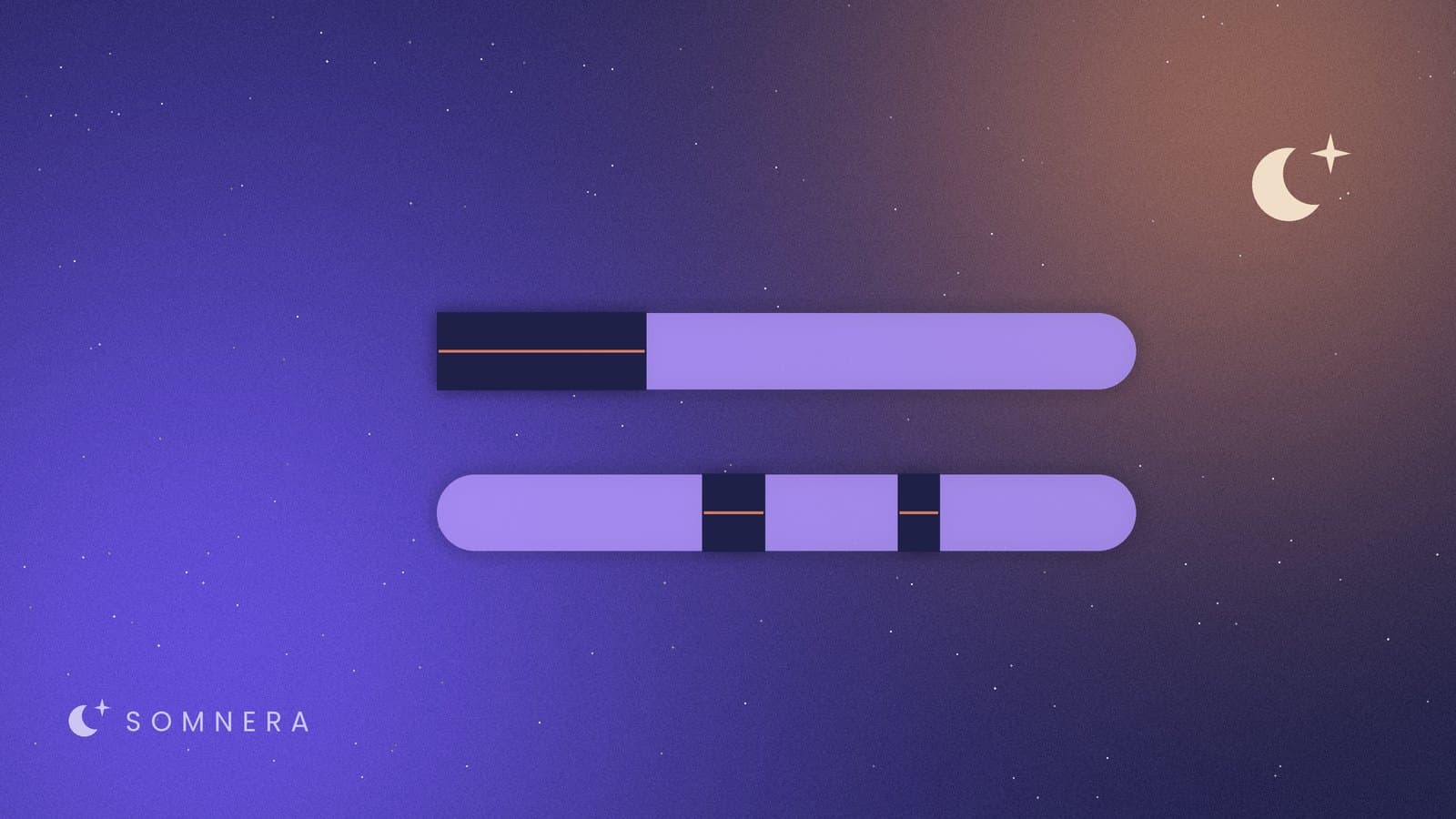
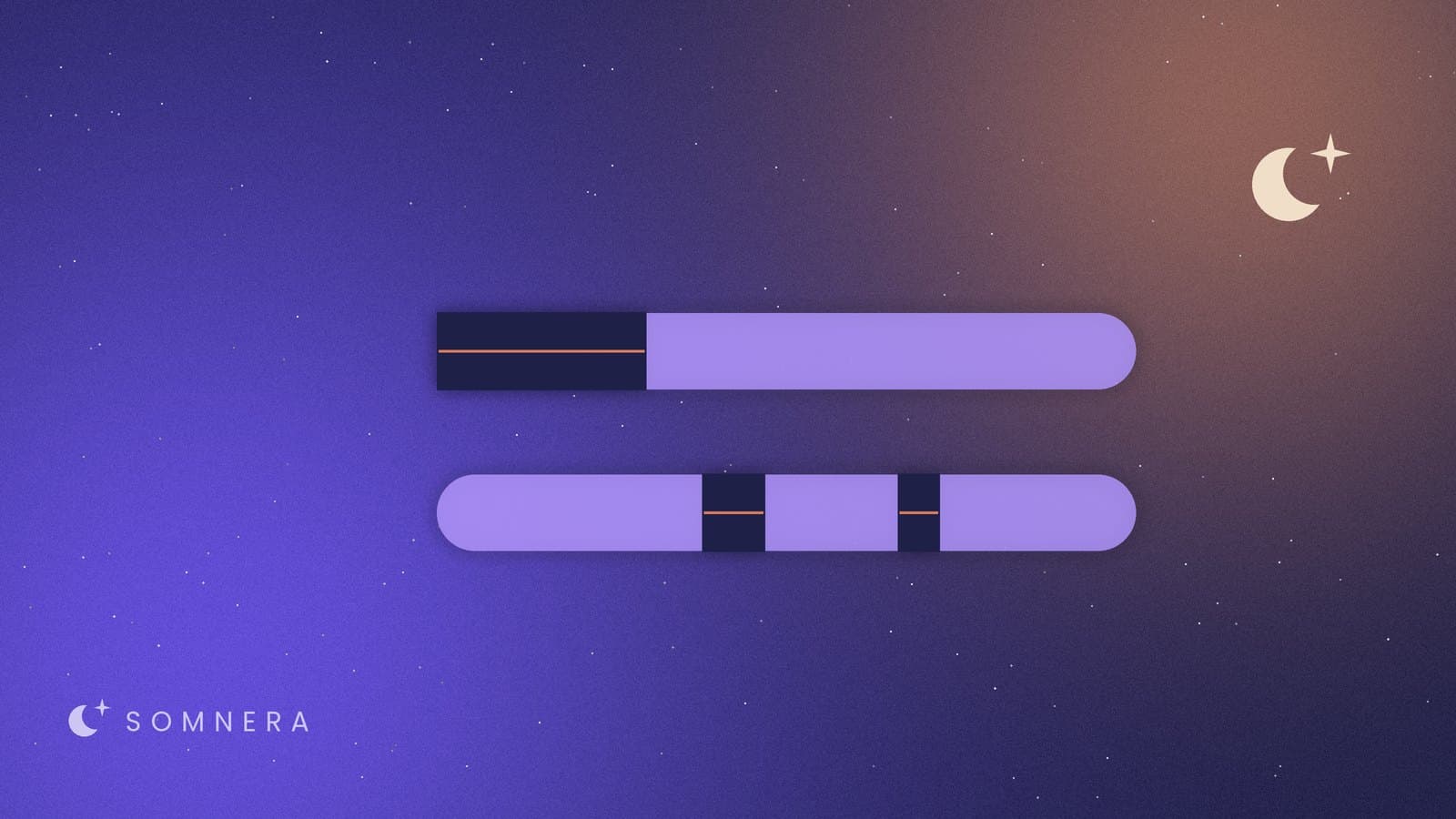
Two nights of sleep shown as bars, one with a long gap at the start and one with gaps in the middle

Share

You cannot force sleep, but you can stop getting in its way.

You know the scene. The alarm is set, the pillow has been flipped to the cool side twice, and you have done the polite thing of lying perfectly still so sleep can find you. It does not. Instead your brain helpfully offers a full replay of something you said at a dinner party years ago, then opens a search tab on your phone for "how to fall asleep fast." Which is roughly how you got here.

Most advice on this is a list of tricks. Some of them help. A few of them, used by someone who already struggles with sleep, make things worse.

This is the honest version: what is worth doing tonight, why trying hard backfires, and how to tell when the problem has stopped being about tips.

Why falling asleep is not something you can do

Sleep is not an action. It is what happens when two things line up: enough sleep pressure built up over a day awake, and a low enough level of alertness to let it take over. You can influence both. You cannot will either into place.

That distinction matters, because almost every method for falling asleep quickly works by lowering alertness rather than by producing sleep directly. The aim tonight is not to make sleep happen. It is to remove what is holding it off. Think of it less like flipping a switch and more like coaxing a nervous cat out from under the sofa: the harder you reach, the further back it goes.

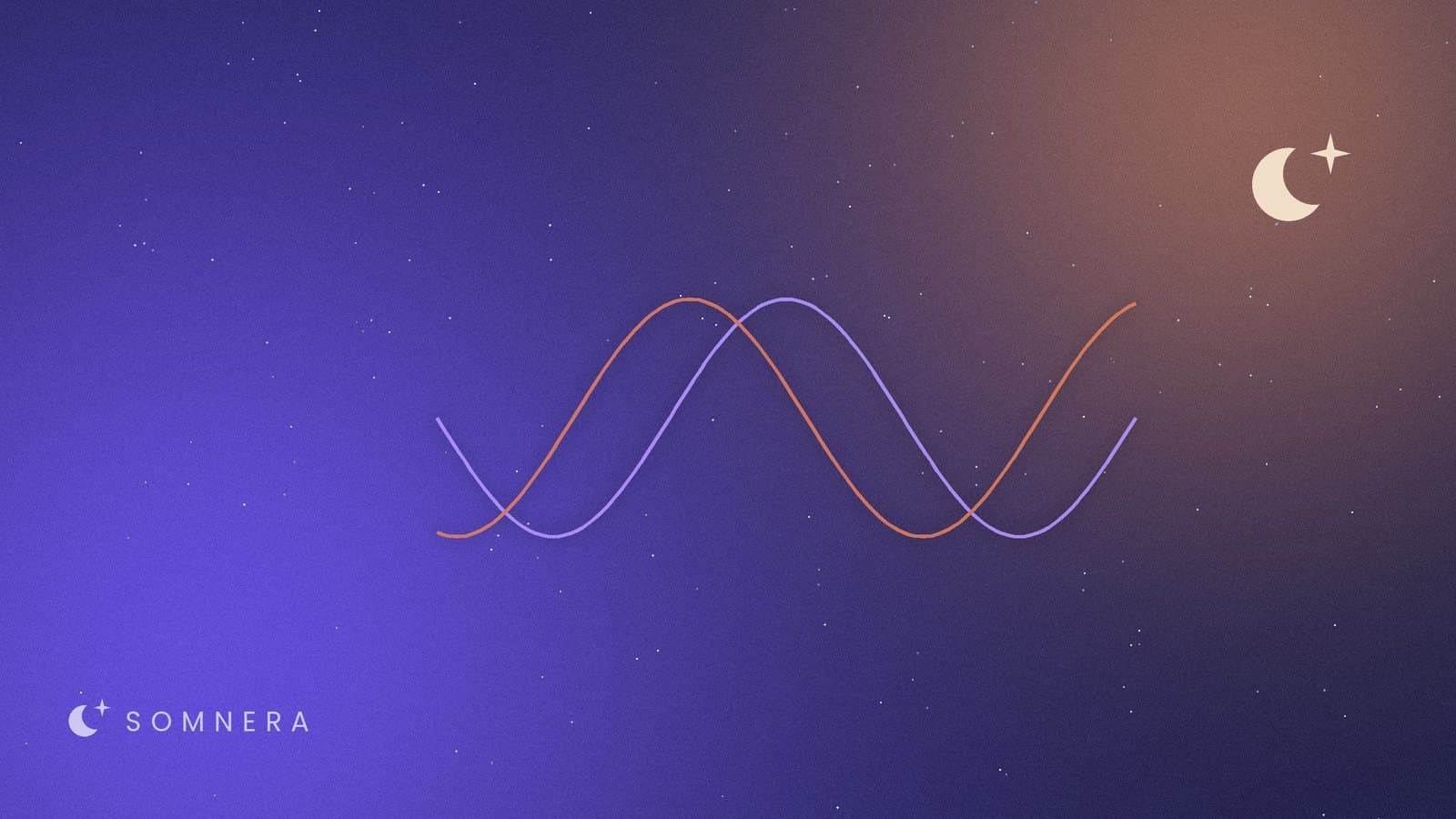
Sleep comes Sleep stalls Pressure Alertness Pressure Alertness
Illustration, not data. Sleep tends to arrive when the pressure to sleep outweighs alertness. Most quick techniques work on the alertness side.

What helps on a given night

None of these are dramatic. They are the conditions under which sleep tends to arrive on its own.

A wind-down buffer

Going straight from email, an argument or a gripping show into bed asks your brain to downshift in seconds. Give it a stretch of dim, low-stakes time first: a book, a shower, tidying, quiet music. The point is a gap between the day's demands and the pillow.

If your mind tends to fill that gap with tomorrow's problems, writing a short list of tomorrow's tasks before bed gives the unfinished thoughts somewhere to go. There is more on this in why your mind races the moment the light goes off.

A cool, dark, quiet room

Ordinary, and still worth checking. A room that is too warm, too bright or noisy keeps you nudged toward alertness. Blackout curtains, a fan or earplugs, and a slightly cooler room than you would choose during the day are cheap changes, and they appear in most mainstream guidance, including the NHS overview of insomnia. On their own they rarely solve real insomnia, but they remove friction.

Go to bed sleepy, not just tired

Tired is drained. Sleepy is heavy-eyed, head nodding, losing the thread of what you are reading. Going to bed because it is the right time, rather than because you are sleepy, sets up a long stretch of lying there. If you are not sleepy yet, stay up a little longer in dim light. Why you can be exhausted and still unable to sleep explains the difference.

Get out of bed if it is not happening

This is the one most people resist, and the one with the most behind it. If you have been lying awake a while and are not getting sleepier, get up. Go somewhere else, keep the light low, do something quiet and slightly boring, and return when you feel sleepy. Protocols generally use fifteen to twenty minutes, judged by feel rather than by watching a clock.

It feels backward when you are desperate to sleep. The reason is that lying awake in bed teaches your body the bed is a place for being awake. Getting up breaks that pairing. The full rule is in should I get out of bed when I can't sleep.

Keep the clock out of sight

Checking the time starts the arithmetic: how long is left, how bad tomorrow will be. That is arousal, which is the opposite of what you need. Turn the clock away and put the phone across the room.

A fixed wake time tomorrow

This does nothing for tonight and a great deal for the next one. Getting up at the same time each morning, however the night went, builds steady sleep pressure for the following evening. Sleeping in after a bad night feels kind, and it quietly pushes the problem into tomorrow.

Relaxation methods worth trying

These are tools for lowering alertness. They suit some people better than others, and they work best practiced during the day before you lean on them at night. Relaxation techniques for insomnia covers them in more depth.

Progressive muscle relaxation

Work through the body one muscle group at a time: tense it gently, hold briefly, then let it go and notice the difference. Feet, calves, thighs, and upward to the face. The contrast makes it easier to feel what released muscle is like, and the steady attention gives the mind something neutral to do.
Cognitive shuffle

Pick a neutral word, then for each of its letters picture a string of unrelated, harmless things that start with that letter. Bread, bicycle, balloon. Then on to the next letter. The idea is to occupy the mind with something mildly engaging and meaningless, crowding out the worry without giving it new material.

The military method

This routine circulates widely online, often with promises about falling asleep within minutes. In practice it is a straightforward relaxation sequence: let the muscles of the face go slack, drop the shoulders and let the arms hang loose, breathe out slowly while relaxing the chest, then the legs, and then hold a calm image in mind for a while, or repeat a simple phrase such as "don't think." There is nothing wrong with trying it. Judge it the way you would any relaxation method: on whether it helps you settle, not on whether it hits a deadline.

Slow breathing

Lengthening the out-breath, without straining, is a simple way to give your body a calmer signal. Keep it comfortable. If counting breaths starts to feel like a test you are failing, drop the counting.

Why trying hard backfires

Here is the catch for anyone with insomnia. Every one of the methods above can be turned into a performance: a technique you must do correctly, with a result you must get. When that happens, it stops working.

Sleep researchers have a name for this: sleep effort. Direct voluntary attempts to control sleep exacerbate and perpetuate insomnia, and there is a validated scale that measures precisely this "sleep effort." Lying there concentrating on falling asleep, checking whether the breathing is working yet, doing the military method a third time with rising frustration: all of this is effort, and effort is alertness.

Good sleepers do not do anything to fall asleep. They lie down and stop paying attention. People with insomnia often have the opposite habit, built from many bad nights: they watch for sleep, and the watching keeps it away.

That is why the most useful attitude toward these techniques is a slightly indifferent one. Do the wind-down. Try the relaxation. If sleep does not come, get up, without treating it as a failure. For some people the fear of another bad night has become the main problem; sleep anxiety and the fear of not sleeping is about exactly that.

Tonight's 5-step plan

Tonight's plan

  1. Start a wind-down buffer. Dim the lights, put work and news away, and do something calm and low-stakes.
  2. Set up the room. Cool, dark, quiet, clock turned away, phone across the room.
  3. Go to bed when sleepy, not just when the clock says so.
  4. Use a relaxation method lightly. Progressive muscle relaxation, a cognitive shuffle or slow breathing, without grading yourself on it.
  5. If sleep is not coming, get up. Something quiet and dull in dim light, back to bed when sleepy. Then get up at your usual time tomorrow regardless.
Keep it light. The plan is a set of conditions, not a test you can fail.

When it stops being a tips problem

Everyone has the odd night when sleep will not come: before a big day, after a late coffee, during a stressful week. Tips are made for those nights.

It is a different situation when trouble sleeping becomes the pattern. A pattern lasting three or more nights a week for three months or more is what clinicians call chronic insomnia, and it is worth doing something structured about rather than managing night by night. At that point the issue is no longer what you do in the dark. It is the system that has formed around sleep: time in bed, conditioned arousal, sleep effort.

It is also worth knowing which kind of trouble you have. Taking a long time to drop off and waking in the night with gaps in the middle can feel similar but tend to point in different directions; trouble falling asleep vs. staying asleep walks through the difference. If you want a sense of how severe your own sleep problem is, the Insomnia Severity Index is the standard questionnaire.

For chronic insomnia, the recommended first-line treatment is cognitive behavioral therapy for insomnia, or CBT-I (see the American Academy of Sleep Medicine's patient guide). It works on the same mechanisms described here, but deliberately and over weeks: a consistent rising time, a bed used for sleeping, a tighter window of time in bed so sleep pressure builds, and work on the worries and effort that keep you alert. What CBT-I is explains the approach, and how to do CBT-I at home covers what it looks like in practice.

A word on sleep aids

Many people reach for something from the pharmacy when sleep will not come. Whether any sleep aid, including melatonin, makes sense for you depends on your health and your other medicines, so that conversation belongs with your prescriber or pharmacist. Our article on whether melatonin works for insomnia sets out what the evidence does and does not show.

When to see a doctor

Get it looked at rather than worked around if you snore loudly, wake gasping, or have been told you stop breathing; if your legs feel restless in the evening; if this started suddenly or alongside a new medication; if low mood or anxiety is part of the picture; or if the daytime tiredness is affecting your driving. These are signs that something other than, or as well as, insomnia may be involved. The NHLBI page on insomnia is a good plain-language starting point for that conversation.

The short version

On a given night, lower the alertness rather than chasing the sleep: wind down, cool the room, go to bed sleepy, relax without grading yourself, and get up if it is not happening. If you find yourself needing these tricks most nights, the tricks are not the answer. A structured approach is.

Somnera is a self-guided education program built on CBT-I, founded and written by Dr. Camilo Ruiz, DO, FACOI, FAASM. It is not a diagnosis and does not replace care from your own clinician. The assessment is free, takes about two minutes, and tells you where you actually stand.

Citations

  • Edinger JD, et al. Behavioral and psychological treatments for chronic insomnia disorder in adults: an American Academy of Sleep Medicine clinical practice guideline. J Clin Sleep Med. 2021;17(2):255–262. doi:10.5664/jcsm.8986
  • Qaseem A, et al. Management of chronic insomnia disorder in adults: a clinical practice guideline from the American College of Physicians. Ann Intern Med. 2016;165(2):125–133. doi:10.7326/M15-2175
  • Espie CA, et al. The attention–intention–effort pathway in the development of psychophysiologic insomnia: a theoretical review. Sleep Med Rev. 2006;10(4):215–245. doi:10.1016/j.smrv.2006.03.002
  • Broomfield NM, Espie CA. Towards a valid, reliable measure of sleep effort. J Sleep Res. 2005;14(4):401–407. doi:10.1111/j.1365-2869.2005.00481.x

Sources and further reading

Frequently asked questions

Nobody can reliably order sleep on a timer, and setting a deadline tends to add pressure that keeps you awake. What you can do is lower arousal: a dim wind-down, a cool dark room, a relaxation method, and getting up if sleep is not coming.

It is a relaxation routine: loosening the face, shoulders and limbs, slowing the breath, and holding a calm image in mind. Relaxation methods help some people settle. Treat it as one tool to try, not a switch that guarantees sleep.

If you have been awake a while and are not getting sleepier, get out of bed, do something quiet and dull in dim light, and come back when you feel genuinely sleepy. Protocols generally use fifteen to twenty minutes, judged by feel rather than by the clock.

Being tired and being sleepy are different. You can be exhausted and still too alert to sleep, especially if the bed has become linked with lying awake and worrying.

That is a question for your prescriber or pharmacist, who knows your health and other medicines. Our article on melatonin explains what the evidence does and does not show.

A pattern lasting three or more nights a week for three months or more is what clinicians call chronic insomnia, and it is worth doing something structured about rather than managing night by night.