Somnera
The middle of the night

How to stay asleep through the night: a practical guide

Waking in the night is normal. Staying awake for an hour is the part that can change, and most of the work happens in daylight.

9 min read

Last reviewed October 17, 2026

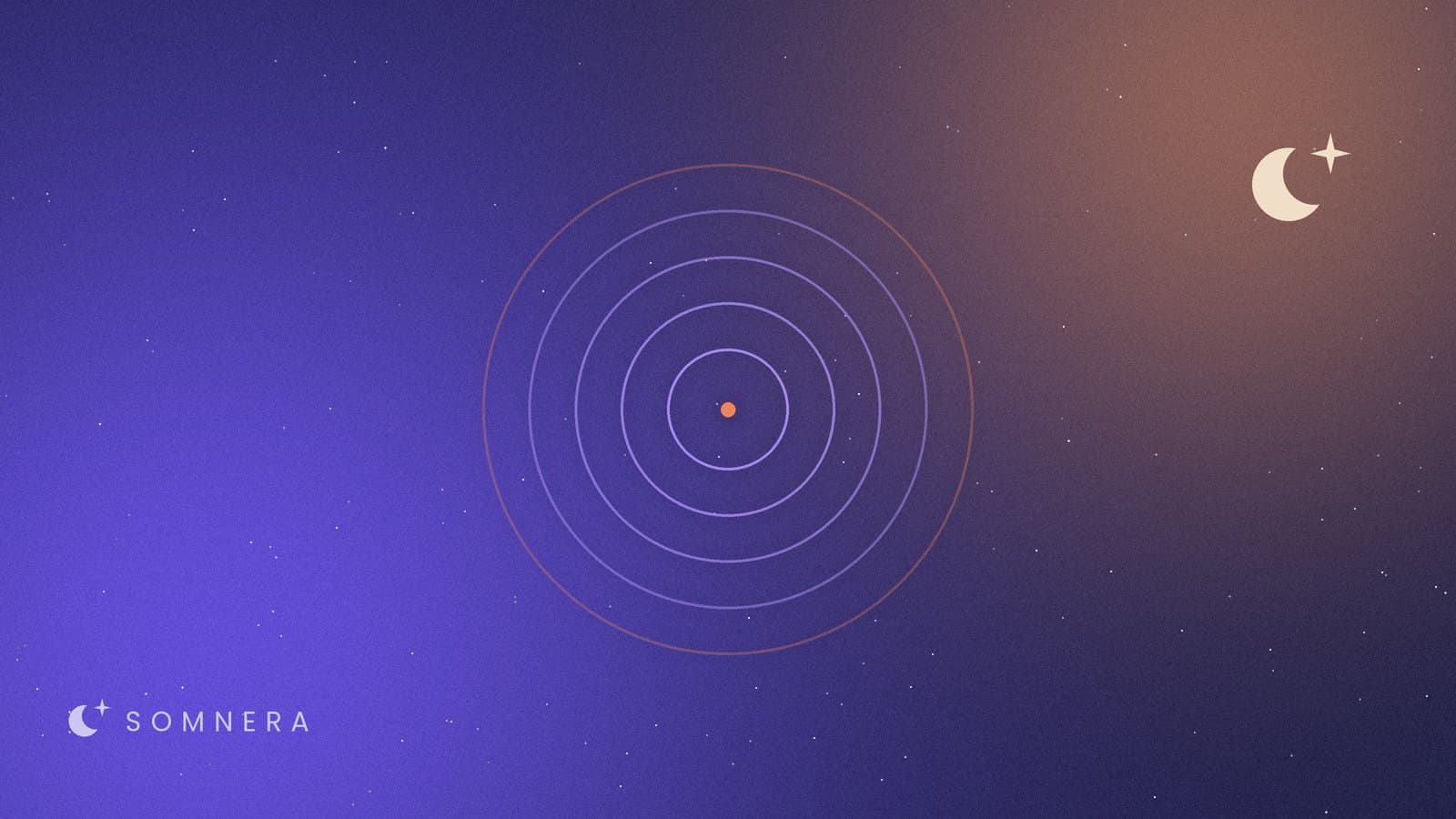
A night drawn as sleep stages, with one long stretch up at the waking level marked out.

Share

It is dark. The house is silent except for the fridge, which has apparently chosen tonight to hum a complete opera. You are awake. You do not know why, and you do not know what time it is, and you know with total certainty that you are about to find out. You reach for your phone. The screen lights up your face like a campfire story. And now you are not just awake: you are awake, calculating, and slightly annoyed with a kitchen appliance.

If you are searching for how to stay asleep, this is probably a familiar scene. The good news is that the wake itself is not the problem. The better news is that the part that is the problem can change. This guide covers what happens in the night, what to do the moment you wake, and the daytime habits that make sleep hold together. For the quick version at the bedside, what to do right now if you can't sleep is one page over.

Waking up in the middle of the night is normal

Everyone wakes in the night, several times. Sleep runs in cycles of roughly ninety minutes and there is a brief surfacing at the end of each one. Normally you turn over, rearrange a pillow, and never remember it. Deep sleep is concentrated early in the night; the later hours hold more light sleep, which is why the wakes you actually notice tend to show up in the small hours. There is a fuller explanation in why you wake up at 3am.

Awake REM Light Deep The long one Brief wakes: forgotten by morning Bedtime Morning
A night's sleep cycles. The brief spikes to the awake line are normal and usually forgotten. The highlighted stretch is the kind of wake that sleep maintenance insomnia is made of.

So the goal is not a night with zero wakings. Nobody gets that, including the people who swear they "sleep like a log." The goal is wakes that stay brief.

Why you can't stay asleep: what turns a wake into an hour

A brief wake becomes a long one through a small, very human chain of events. It usually goes something like this.

You check the time. This feels like gathering information. In practice, it starts a calculation: if I fall asleep right now I get this many hours, and I have that meeting, and last Tuesday was bad too. Arithmetic is not a sleepy activity.

You start to worry. Lying in the dark with nothing to do is an ideal stage for worry. Tomorrow's to-do list, a remark you made in a meeting, whether you locked the car. The brain, finding itself with an audience of one, puts on a show. If this is the main event for you, a racing mind at night has its own answer.

You try to fall back asleep. This is the cruel one. Sleep is not a thing you can do on purpose; it arrives when the conditions allow it. Trying is effort, effort is arousal, and arousal is the opposite of sleep. Picture trying very hard to relax at the dentist. Same energy.

You lie there anyway. Night after night, the bed slowly becomes associated with being awake and frustrated. That learned link is a big part of why sleep maintenance insomnia tends to keep going even after whatever started it has passed.

None of these steps is irrational. All of them are the opposite of what would put you back to sleep. The plan below is built to interrupt them.

What to do when you wake up in the middle of the night

When you wake at night

  1. Leave the clock alone. Turn it to face the wall and leave the phone where you cannot reach it.
  2. Let the wake be a wake. Turn over, settle, do not try to force sleep.
  3. Awake a while? Get up. Judge it by feel, not by checking the time.
  4. Do something dim and calm. A dull book, quiet music, folding laundry. Nothing with a scroll.
  5. Back to bed when sleepy. Heavy-eyed sleepy, not just bored of the sofa. Repeat if needed.

Then get up at your usual time, whatever the night was like.

A simple plan for the moment you wake. It is designed to lower arousal and keep the bed linked with sleep.

Do not check the time

Of all the moves, this is the cheapest and the most effective at stopping the chain early. The time does not help you sleep. It only gives the worrying part of your brain some numbers to work with. Put the clock out of sight before bed so the decision is already made.

If you are awake a while, get up

Protocols generally use fifteen to twenty minutes, judged by feel rather than by watching a clock. If you notice you are wide awake, irritated, or rehearsing tomorrow, that is your cue. Leaving the bed feels backwards, but lying there is what teaches your body that bed is a place for being awake. Why getting out of bed works covers the reasoning in more detail.

Do something dim, calm and slightly boring

Keep the lights low and the activity dull. A paperback you have read before is ideal. So is a jigsaw, gentle stretching or a podcast about the history of fence posts. Avoid email, news, and anything that refreshes. The aim is not to entertain yourself until sunrise; it is to let arousal settle on its own.

Go back when you feel sleepy

Return when your eyelids are heavy and your head is nodding, not when you think you "should." If you are awake again after a while, repeat. Some nights take a couple of rounds. That is fine. Then get up at your normal time in the morning, even if the night was rough. What to do after a bad night covers the day after.

Daytime habits that help you stay asleep through the night

Here is the slightly unfair truth: the best tools for staying asleep at night are used during the day. Sleep holds together when you go to bed with plenty of sleep pressure and a body clock that knows what time it is.

Keep a fixed wake time

Get up at the same time every day, weekends included. This anchors your body clock and makes sleepiness arrive at a predictable hour. Of all the everyday habits, it does the most to steady everything else.

Skip the long lie-ins

After a bad night, sleeping late feels like justice. Unfortunately it spends the sleep pressure you needed for the next night, which makes that night lighter and more broken, which makes you want another lie-in. It is a loop with excellent marketing. Get up at your usual time and let the tiredness work for you at bedtime.

Be careful with naps

A long afternoon nap does the same thing as a lie-in: it takes the edge off tonight's sleep drive. If you nap, keep it short and early, and never so late that it bleeds into your evening. Should you nap if you have insomnia? goes through the trade-offs. And if you are drowsy enough to be unsafe driving, safety comes first.

Watch what alcohol does to the second half of the night

A nightcap can help you drop off. The catch arrives later: as the body processes the alcohol, sleep in the second half of the night tends to become lighter and more fragmented, with more wakings. In other words, alcohol borrows sleep from the early hours and charges interest in the small hours. Keep it away from bedtime, and do not use it as a sleep aid.

The usual supporting cast

Caffeine kept to the early part of the day, daylight in the morning, and a dark, quiet, reasonably cool bedroom all help. They are sensible, and they are rarely enough on their own for chronic insomnia. The NHLBI's overview of insomnia describes the same everyday habits.

If you take a sleep aid and wonder whether it is helping or hurting your night wakings, talk to your prescriber or pharmacist.

How CBT-I helps with sleep maintenance insomnia

If you wake for long stretches three or more nights a week, for three months or more, that is what clinicians call chronic insomnia, and night-by-night tactics are usually not enough. Cognitive behavioral therapy for insomnia (CBT-I) is the approach clinical guidelines put ahead of medication for chronic insomnia, and it is well suited to the "can't stay asleep" pattern. The American Academy of Sleep Medicine's patient page on insomnia describes it as well.

The core idea is consolidation. Many people with broken sleep spend a long time in bed to "make up" for the wakes. The result is sleep spread thin across the night, like too little butter over too much bread. CBT-I works the other way: it sets a sleep window based on how much you are actually sleeping, so the time in bed matches your real sleep. Sleep pressure builds, the sleep you get becomes deeper and more continuous, and the long gaps shrink. As sleep firms up, the window is gradually widened.

That process is called sleep restriction, and it works alongside the get-up-if-awake routine above (stimulus control), a fixed wake time, and work on the worries that fill the night. A sleep diary keeps the whole thing honest. It is a slower path than a tablet, and the early weeks can feel harder before they feel better, but the improvement comes from changing the patterns that keep insomnia going.

If you are not sure whether your trouble is mainly at the start of the night or in the middle, trouble falling asleep vs staying asleep sorts the two out.

When to see a doctor about waking up at night

Some night waking is a signal rather than a habit. It is worth talking to a doctor rather than reading more articles if:

  • You snore loudly, wake gasping or choking, or someone has told you that you stop breathing.
  • You are waking to use the bathroom several times a night.
  • Pain is what wakes you, or what keeps you awake.
  • Your legs feel restless or crawling in the evening and moving them helps.
  • Your mood is low, you have lost interest in things, or you are waking very early and cannot get back to sleep. Early-morning waking often travels with depression; insomnia and depression explains how the two are linked.
  • It began suddenly, or alongside a new medication.

If you are having thoughts of suicide or of harming yourself, call or text 988 in the US to reach the Suicide & Crisis Lifeline, or go to your nearest emergency department. This article is not a substitute for that.

For help getting taken seriously in the appointment, see how to talk to your doctor about insomnia, or when to see a sleep specialist.

Where to start

Tonight: clock out of sight, and if you are awake a while, get up and do something dim and dull. Tomorrow: get up at your usual time, no matter what. Over the coming weeks, if the pattern is stubborn, a structured CBT-I approach is the next step. Your brain learned its way into broken nights, and it can learn its way out.

Somnera is a self-guided education program built on CBT-I, founded and written by Dr. Camilo Ruiz, DO, FACOI, FAASM. It is not a diagnosis and does not replace care from your own clinician. The assessment is free and takes about two minutes.

Sources and further reading

Frequently asked questions

Keep a fixed wake time every day, skip long lie-ins and long naps, keep alcohol away from bedtime, and when you do wake, do not check the clock. If you are awake a while, get up, do something dim and dull, and go back when you feel sleepy.

Yes. Sleep runs in cycles of roughly ninety minutes and there is a brief surfacing at the end of each one. Most of those wakes are forgotten by morning. The problem is not waking, it is staying awake for long stretches.

It is insomnia where the main trouble is staying asleep rather than falling asleep: long wakes in the night, or waking too early and not getting back to sleep. When it happens three or more nights a week, for three months or more, clinicians call it chronic insomnia.

Being tired and being sleepy are not the same thing. Worry, clock-watching and the effort of trying to sleep all raise arousal, and arousal wins over tiredness. Building steady sleep pressure during the day and lowering effort at night is what helps.

It can help you drop off, but as the body processes it, sleep in the second half of the night becomes lighter and more broken. It is one of the more common hidden reasons people wake in the small hours.

If you snore loudly or wake gasping, need to urinate several times a night, wake with pain, or your mood is low and you are waking early and unable to get back to sleep. If you are having thoughts of harming yourself, call or text 988 in the US.